Updated November 3, 2026, with Freddie Mac’s October 29 survey. This page is updated after each weekly release; the next one is due November 5.
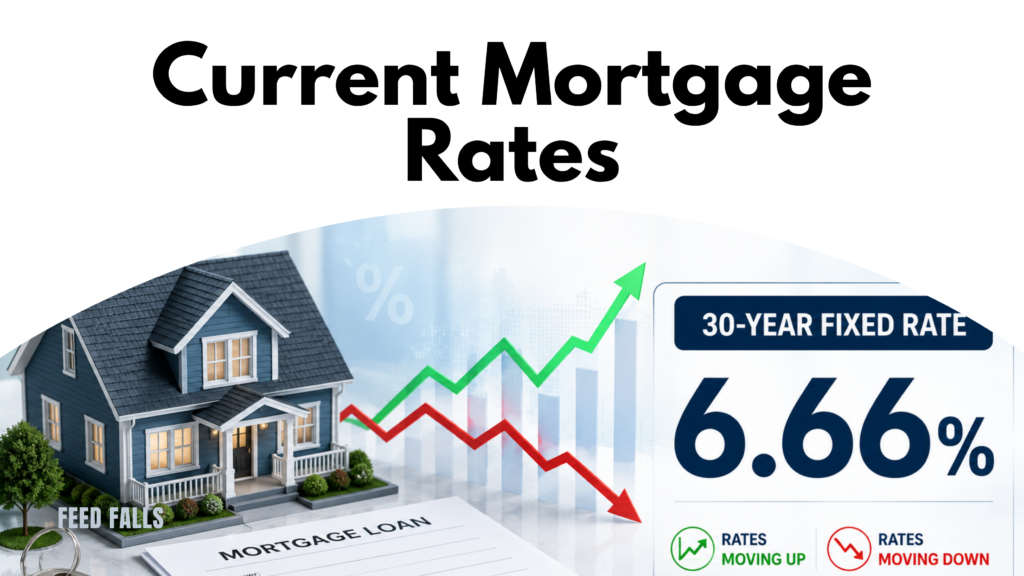
The average 30-year fixed mortgage rate is 7.24%, down from 7.32% a week earlier, according to Freddie Mac’s Primary Mortgage Market Survey released October 29, 2026. The 15-year fixed averages 6.60%. Rates have eased for two straight weeks after hitting 7.40% in early October, the highest level of 2026.
What are mortgage rates this week?
| Loan type | Oct 29, 2026 | Week earlier | Year earlier |
|---|---|---|---|
| 30-year fixed | 7.24% | 7.32% | 6.17% |
| 15-year fixed | 6.60% | 6.68% | 5.41% |
These are national weekly averages for borrowers with strong credit and a 20% down payment. They are not quotes from a lender. Your rate depends on your credit score, down payment, loan type, property and the lender you choose.
Related: Warren Buffett’s S&P 500 Advice: The 90/10 Rule Explained · Bitcoin Price Today: BTC Falls Below $80,000 After August Rally
How have mortgage rates changed since August?
The 30-year average climbed about three-quarters of a percentage point in six weeks, from 6.66% in late August to 7.40% in early October. It has eased slightly since.
| Week | 30-year fixed | 15-year fixed |
|---|---|---|
| Oct 29 | 7.24% | 6.60% |
| Oct 22 | 7.32% | 6.68% |
| Oct 15 | 7.40% | 6.71% |
| Oct 8 | 7.40% | 6.73% |
| Oct 1 | 7.28% | 6.60% |
| Sep 24 | 7.03% | 6.42% |
| Sep 10 | 6.76% | 6.09% |
| Aug 27 | 6.66% | 5.98% |
For context, the 2026 low was 5.98% in late February. Today’s rate is about a full point above a year ago.
Why did mortgage rates jump this fall?
Mortgage rates follow the 10-year Treasury yield more closely than the Federal Reserve’s benchmark rate. The 10-year yield averaged 4.94% in September and moved above 5% late that month, according to the National Association of Home Builders. On October 7 it rose above 5.35%, its highest level since 2002, Forbes reported.
Several pressures hit the bond market at once:
- A Fed rate hike. On September 16 the Fed raised its benchmark rate by a quarter point, to a range of 3.75% to 4.00%.
- Energy-driven inflation. Consumer prices rose 3.4% in the 12 months through August, with gasoline up 27.4% after conflict with Iran took refining capacity offline.
- Government deficits. The Congressional Budget Office projects a $1.9 trillion federal deficit for fiscal 2026.
- Heavy corporate borrowing for AI. Goldman Sachs estimated AI-related bond issuance at $489 billion this year, competing with Treasuries for investors. Our explainer on whether companies are cutting AI spending covers the wider picture.
- A global bond selloff. Yields also rose in Japan, the UK and France. See what’s going on with France’s debt crisis.
Why are rates easing now?
The 10-year yield slipped back below 5%, to about 4.93% on October 30, and the Fed held its rate steady at 3.75% to 4.00% on October 28 in a 10–2 vote, The Mortgage Reports noted. Freddie Mac said the 30-year rate fell to its lowest level of the month, which slightly improves buyers’ purchasing power.
What does a 7.24% mortgage rate mean for your payment?
Here is the monthly principal and interest on a $400,000, 30-year fixed loan at recent average rates. FeedFalls calculated these figures with a standard amortization formula.
| Rate | When | Monthly payment | Total interest over 30 years |
|---|---|---|---|
| 6.17% | Late October 2025 | $2,442 | $479,154 |
| 6.66% | August 27, 2026 | $2,571 | $525,383 |
| 7.24% | October 29, 2026 | $2,726 | $581,357 |
| 7.40% | 2026 peak (Oct 8–15) | $2,770 | $597,027 |
Compared with late August, the same loan now costs about $155 more a month, or roughly $56,000 more in interest over the life of the loan. A 15-year loan at 6.60% would cost about $3,506 a month but far less interest overall.
Should you lock a rate or wait?
No one can reliably time mortgage rates. Major forecasters do not expect a quick return to 6%: Fannie Mae projects the 30-year rate at 7.4% to 7.5% through the third quarter of 2027, and the Mortgage Bankers Association projects 7.2% to 7.3%, according to The Mortgage Reports.
If you are shopping now, a few steps help regardless of where rates go:
- Get written Loan Estimates from at least three lenders on the same day, and compare the APR, not just the rate.
- Ask how long a rate lock lasts, what an extension costs and whether a “float-down” option is available if rates fall.
- Check that the payment fits your budget today. Refinancing later is possible if rates drop, but it has closing costs and is not guaranteed.
If you are investing rather than borrowing, our guide to Warren Buffett’s advice for a market downturn covers how to think about volatile markets. This article is general information, not financial advice.
What to watch next
- November 5: Freddie Mac’s next weekly survey. We will update this page.
- November 6: The October jobs report from the Bureau of Labor Statistics.
- November 10: October consumer price index (CPI release schedule). Another hot inflation reading would put upward pressure on yields.
- December 8–9: The Fed’s next policy meeting, with new economic projections.


