
Space Lesbian Cartoon Hate: Why Lesbian Space Princess Is Trending
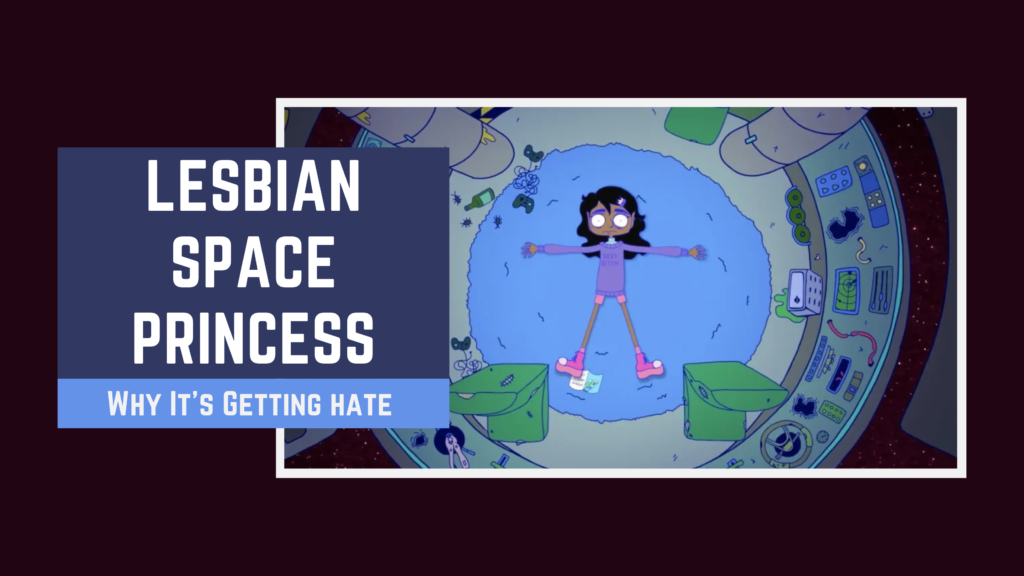
The sudden backlash against Lesbian Space Princess has become an unlikely internet fandom story. The Australian animated film has recently been targeted by waves of memes, negative posts and review-bombing, while rival online fandoms have jokingly portrayed themselves as joining forces against it.
But the situation is more complicated than simply “everyone hates the movie.” The film had already received festival recognition and positive attention before a much broader social-media backlash emerged in August 2026.
Why is Lesbian Space Princess getting so much hate?
Much of the criticism centers on the movie’s deliberately exaggerated humor, visual style and online-culture references.
The film is an adult animated sci-fi comedy with an intentionally irreverent approach to queer culture, relationships and internet humor. Some viewers genuinely dislike that style. Even favorable coverage has acknowledged that its jokes can be juvenile, provocative and extremely online.
The problem is that genuine criticism has increasingly become mixed with a much larger social-media pile-on.
Clips taken out of context have circulated widely, with some people criticizing the film after seeing only short snippets rather than watching it in full. Cartoon Brew reported that many negative posts showed little evidence that their creators had actually seen the movie.
What is the “fandom war”?
The backlash has developed into an internet meme sometimes described as the “Lesbian Space Princess Fandom War” or “Great Fandom Truce of 2026.”
The joke is straightforward: fandoms that normally argue with one another supposedly put their differences aside to unite against Lesbian Space Princess.
TikTok edits have brought together characters and communities associated with different animated shows, games and other franchises. The “temporary truce” became part of the joke itself, rather than representing an organized campaign.
That distinction is important. Some posts are clearly meme-driven and are not serious attempts to attack the film. Others have crossed into genuine hostility and culture-war commentary.
Is the backlash really about the movie?
Partly—but not entirely.
There are legitimate reasons someone might dislike Lesbian Space Princess. Its humor is intentionally loud and sometimes crude, and its approach will not appeal to everyone. Criticizing the writing, animation, pacing or jokes is normal movie discussion.
The controversy becomes different when criticism is based almost entirely on isolated clips, assumptions about the filmmakers or hostility toward the film’s queer perspective.
Cartoon Brew argued that some of the online response has moved beyond ordinary criticism into harassment and hate speech.
The movie had a very different reception before the backlash
One of the stranger aspects of the controversy is how sharply the recent online reaction contrasts with the film’s earlier reception.
According to Cartoon Brew, Lesbian Space Princess premiered at the Berlin International Film Festival, where it won the Teddy Award for best feature and placed second in the Panorama Audience Award. It subsequently received audience awards at the Adelaide and Sydney film festivals and screened at several other international festivals.
That does not mean the film is universally acclaimed. Awards and festival recognition do not make a movie immune to criticism. They do, however, show that the current online backlash is not representative of the entire history of its reception.
Why did the backlash spread so quickly?
The controversy illustrates how social-media algorithms can turn a relatively niche movie into a viral target.
A short clip can travel much faster than a full review or a nuanced discussion. Once users see thousands of other people mocking the same scene, participating in the joke becomes easier than investigating the movie itself.
The result can be a feedback loop:
- A clip attracts attention.
- Users mock or criticize it.
- More accounts create reaction videos.
- Fandoms turn the controversy into a meme.
- The meme introduces the movie to even more people.
- Some viewers begin criticizing the film without seeing it.
The irony is that a campaign intended to make fun of a relatively niche animated movie can dramatically increase its visibility.
Criticism and harassment are not the same thing
There is nothing unusual about disliking Lesbian Space Princess. Viewers can disagree with its humor, storytelling, animation or treatment of gender and sexuality.
What deserves more scrutiny is criticism that shifts from the work itself to attacking creators or questioning their identities.
That distinction is particularly relevant because the film was made by artists drawing on queer experiences and perspectives. Cartoon Brew reported that some of the online reaction has specifically targeted those aspects rather than engaging with the film as a piece of animation.
A useful rule for evaluating the controversy is simple: criticism should be about what the film does, not an excuse to attack the people who made it.
The bigger story is internet fandom culture
The Lesbian Space Princess controversy is less interesting as a question of whether one animated movie is “good” or “bad” than as another example of how online fandom works.
A movie can become a shared joke without most participants having watched it. Rival communities can temporarily unite because the alliance itself becomes entertaining. And a legitimate criticism can become difficult to separate from meme culture once thousands of posts are repeating the same talking points.
For viewers curious about the film, the simplest approach is still the most useful: watch it and make up your own mind.
The current “space lesbian cartoon hate” trend says something about internet culture, but it does not by itself tell you whether Lesbian Space Princess is worth watching.