
Cat in the Hat Trend: What Is It and Why Are Schools Involved?
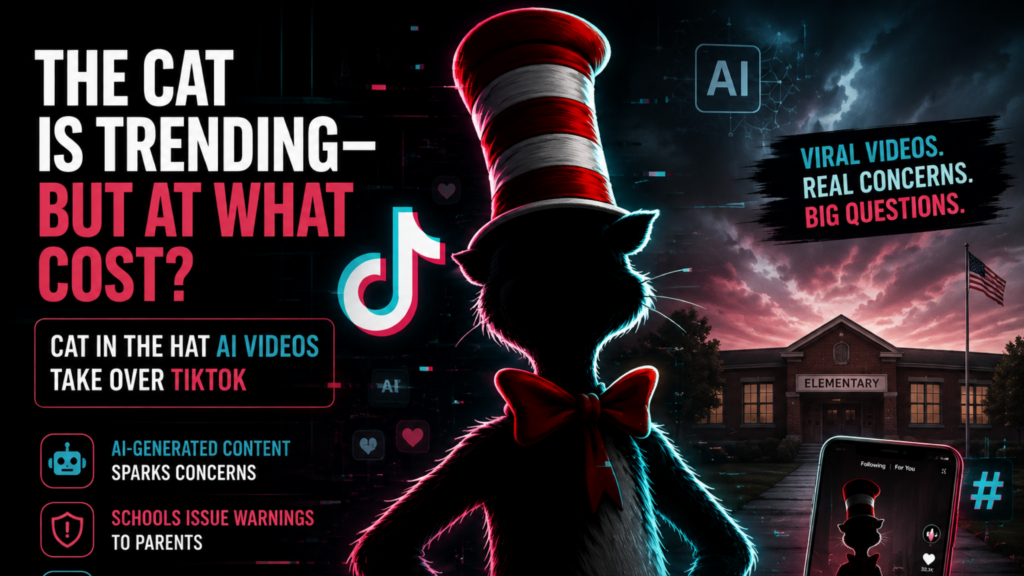
The Cat in the Hat trend is a viral social media phenomenon that has taken a disturbing turn. What began largely as dark-humor edits using the Cat in the Hat character has evolved into AI-generated images and videos that portray the character as a threatening figure and, in some cases, reference real schools, communities or students.
The trend has prompted warnings from police and school officials in several parts of the U.S. Some authorities have said they found no credible threat, but posts that appear to threaten specific people or schools are being investigated seriously.
What is the Cat in the Hat trend?
The trend uses the familiar character from Dr. Seuss’ The Cat in the Hat in unsettling or horror-style social media content.
Early versions primarily used scenes from the 2003 live-action The Cat in the Hat movie starring Mike Myers. Creators added dark captions, eerie music and horror-style edits to turn otherwise comedic scenes into disturbing memes.
The format later expanded into AI-generated content. Some videos make it appear as though the Cat in the Hat is wandering through neighborhoods, appearing outside homes or targeting particular locations.
That shift has made the trend more than an ordinary horror meme.
Why is the trend causing concern?
The most serious versions of the trend include names of real students, schools and communities, sometimes alongside threatening language.
Police and school officials in Kentucky, Texas and other states have issued warnings as these posts spread. Louisville police, for example, said there was no information indicating a credible threat despite awareness of the trend circulating around local schools.
Some school districts have increased security or communicated with families after their schools or students were mentioned.
In Texas, several districts responded to posts connected with the trend, while authorities emphasized that threatening social media content should not be treated as a joke.
Is the Cat in the Hat actually attacking people?
There is no evidence that the fictional character is real or that a costumed Cat in the Hat is carrying out the attacks depicted in the viral videos.
Much of the disturbing imagery is digitally manipulated or AI-generated. Police forces in the U.S., UK and Ireland have addressed versions of the trend and warned people against treating fabricated social media posts as genuine reports.
However, that does not mean every post connected to the trend can simply be dismissed.
A fabricated image can still cause real-world fear, especially when it names an actual school or student.
The trend has already led to an arrest
The consequences have moved beyond online arguments.
In Grand Junction, Colorado, police said a 14-year-old student was arrested on August 31, 2026, after a social media post connected to the Cat in the Hat trend suggested that an individual could appear at West Middle School and at random residences.
Police and school safety officials determined there was no credible threat, but the student was arrested on charges of interference with staff, faculty or students of educational institutions and harassment. He was released to his parents.
The case illustrates an important distinction: the viral trend may be fictional, but using it to create fear around real people or schools can have real consequences.
How the Cat in the Hat trend spread
The trend appears to have developed in stages.
1. Dark memes
Creators first repurposed footage from the 2003 movie, adding bleak or disturbing captions. The format became popular on TikTok during the summer of 2026.
2. Horror-style edits
Users began making the Cat look more sinister through editing, altered footage and unsettling music.
3. AI-generated videos
AI tools made it easier to create entirely new scenes showing the character in realistic-looking environments, including streets, homes and other locations.
4. Fake threats
Some posts moved from fictional horror into posts naming actual schools, students or communities. This is where the trend began attracting law-enforcement attention.
What should parents and students do?
The safest approach is to treat specific threats differently from ordinary memes.
If you encounter a post connected to the Cat in the Hat trend:
- Don’t repost it, particularly if it names a person or school.
- Don’t assume an alarming image is genuine simply because it looks realistic.
- Save relevant information if a post appears to contain a specific threat.
- Report credible or concerning content to the school and local law enforcement.
- Follow official instructions from your school district or police department.
- Avoid spreading rumors while an incident is being investigated.
Authorities have repeatedly encouraged people to report suspicious content rather than amplify it online.
The bigger lesson behind the trend
The Cat in the Hat trend shows how quickly a harmless fictional character can become the basis for misinformation when memes, AI-generated media and real-world locations are mixed together.
For viewers, the key distinction is simple: a viral video is not evidence that an event actually happened. When a post makes a specific claim about a school, student or potential attack, it should be verified through credible local authorities rather than TikTok or Snapchat reposts.
The trend may have started as dark internet humor, but once real people and schools are named, the consequences can extend well beyond social media.