
Greenland Deal: What Trump’s New U.S.-Denmark Agreement Means
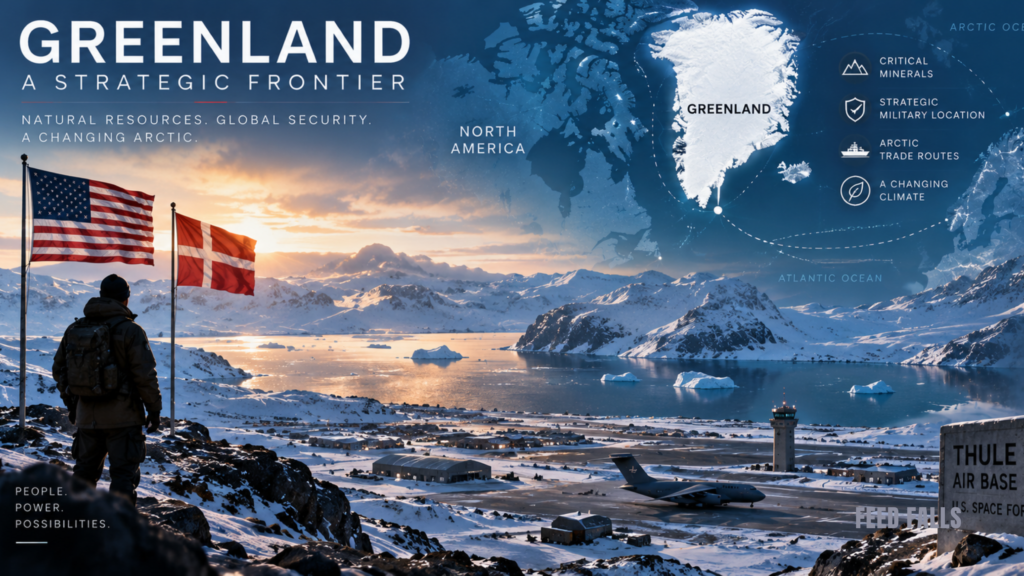
The United States, Denmark, and Greenland have reached a new security agreement that would significantly expand the U.S. military presence on the Arctic island while leaving Greenland’s sovereignty unchanged.
President Donald Trump announced the agreement on September 18, 2026, describing it as giving the United States permanent control over security and other needs in Greenland. Danish and Greenlandic officials have presented the agreement differently, emphasizing that it preserves Denmark’s sovereignty and Greenland’s right to self-determination. The pact is expected to be signed during the United Nations General Assembly next week and still requires approval through the relevant parliamentary processes.
That distinction is important. The new Greenland deal does not transfer ownership of Greenland to the United States. Instead, it is a defense and security arrangement designed to expand America’s military access and prevent rival powers from establishing military or sensitive economic positions on the island.
What is the new Greenland deal?
The agreement is a three-party arrangement involving the United States, Denmark, and Greenland.
According to reporting on the agreement, it would allow the United States to:
- Expand its military presence in Greenland
- Maintain permanent access to the island
- Maintain basing and overflight rights
- Develop additional military facilities where appropriate
- Prevent non-NATO adversaries from establishing military bases or personnel in Greenland
- Restrict certain sensitive investments by U.S. adversaries
The precise language and complete terms have not yet been publicly released, so some important details remain unresolved. Reuters reported that a U.S. State Department official said the agreement would give Washington permanent access, basing and overflight rights and would continue to apply even if Greenland eventually became independent.
Trump has described the arrangement as giving the United States “permanent control” over Greenland’s security. That is broader language than the descriptions coming from Denmark and Greenland, which emphasize sovereignty and self-determination.
Does the United States own Greenland now?
No.
This is one of the most important points to understand about the announcement.
Greenland remains a self-governing territory within the Kingdom of Denmark. Denmark retains responsibility for foreign affairs, security and defense, while Greenland has extensive authority over its own domestic affairs. Greenland’s self-government framework also recognizes the Greenlandic people’s right to self-determination.
The new agreement therefore does not amount to a U.S. annexation or purchase of Greenland.
The distinction is particularly significant because Trump has previously advocated acquiring Greenland. The latest arrangement falls short of that objective by leaving the island within the Kingdom of Denmark while substantially increasing U.S. military access.
What does Denmark say about the agreement?
Denmark has emphasized that the agreement strengthens Arctic and North Atlantic security while preserving the Kingdom’s sovereignty.
Danish Prime Minister Mette Frederiksen said the agreement recognizes the sovereignty and territorial integrity of the Kingdom of Denmark as well as the Greenlandic people’s right to self-determination.
That position is significant because the dispute over Greenland has put unusual pressure on relations between two NATO allies.
Trump’s earlier demands for greater U.S. control over Greenland had raised concerns in Copenhagen and across Europe. The new agreement represents a shift from arguments about territorial acquisition toward a negotiated defense arrangement.
What does Greenland get from the deal?
The publicly available information does not yet provide a complete list of economic or infrastructure benefits for Greenland.
What is clear is that Greenland has been directly involved in the negotiations, and Greenlandic authorities are part of the agreement rather than Denmark acting entirely on the island’s behalf.
The arrangement also recognizes Greenland’s continuing position within the Kingdom of Denmark and its right to self-determination.
That matters because Greenland has its own elected government and parliament and has long maintained an interest in greater autonomy and eventual independence.
The question of Greenland’s future status therefore remains separate from the question of U.S. military access.
Why is Greenland so important to the United States?
Greenland’s geography makes it strategically important.
The island sits between North America and Europe, close to major Arctic and North Atlantic routes. Its location is particularly valuable for monitoring activity across the Arctic and for defending the approaches between North America and Europe.
The United States already operates the Pituffik Space Base, formerly known as Thule Air Base, in northwest Greenland. The base supports missile-warning, missile-defense and space-surveillance functions and has been an important part of U.S. and NATO defense infrastructure in the Arctic for decades.
The United States also already has extensive military rights in Greenland under the 1951 Defense Agreement with Denmark, later amended in 2004.
The 2004 agreement identified Thule, now Pituffik, as the existing U.S. defense area and established procedures for changes to U.S. military operations and facilities.
The new agreement therefore builds on an existing military relationship rather than creating U.S. access to Greenland from scratch.
Why does the Arctic matter more now?
The Arctic has become increasingly important because of changes in the regional security environment, competition among major powers and the potential for greater economic activity.
Russia maintains significant military capabilities in the Arctic, while China has sought greater economic and scientific engagement in the region.
For Washington, preventing rival powers from establishing military infrastructure on Greenland is therefore a major strategic concern.
The new agreement reportedly prohibits non-NATO countries from building military bases in Greenland and places restrictions on sensitive investments by U.S. adversaries.
The broader strategic objective is straightforward: keep Greenland firmly inside the defense architecture of the United States, Denmark and their NATO allies.
What is the Donald Trump Greenland military agreement actually changing?
The United States already had significant military access to Greenland.
The 1951 defense agreement gave Washington extensive rights to establish and operate defense facilities. A 2004 update created a framework for the U.S. presence at Thule and required consultation with Denmark and Greenland before significant changes to U.S. military operations or facilities.
The new agreement appears designed to go further by making U.S. access and military rights more permanent and by explicitly limiting the ability of rival states to establish their own strategic presence.
Reuters reported that the agreement would allow the United States and its allies to make certain sensitive investments while preventing non-NATO adversaries from establishing bases.
However, it is not yet clear exactly how many new troops, facilities or bases will be added.
Trump said the United States would begin developing a large military presence in appropriate areas of Greenland, but the public announcement did not specify the number of personnel, locations or construction timetable.
Will the U.S. build new military bases in Greenland?
Possibly, but the exact plans are not yet public.
Trump has said the United States will begin developing a larger military presence in suitable areas of Greenland. A U.S. official also said the agreement could allow the military to increase the number of bases.
However, reports published immediately after the announcement indicated that it remained unclear whether specific new bases had been approved.
That distinction is worth watching.
There is a difference between an agreement creating a legal framework for expanded military access and a confirmed decision to construct a particular base at a particular location.
Until those details are formally announced, claims about specific future installations should be treated as unconfirmed.
What about Greenland’s independence?
The new agreement does not settle Greenland’s independence question.
Greenland is currently part of the Kingdom of Denmark but has substantial self-government. Its legal framework recognizes the Greenlandic people’s right to self-determination.
Reuters reported that the proposed U.S. security arrangement would continue to apply even if Greenland eventually became independent.
That could make the agreement particularly important for Greenland’s long-term strategic position.
If independence eventually occurs, the island would face the challenge of managing its own defense and foreign-policy relationships. A permanent U.S. security arrangement could provide one potential framework for that relationship, although the exact legal implications would depend on the future status of Greenland and the final text of the agreement.
Does the deal prevent China and Russia from operating in Greenland?
The agreement is intended to do so in important areas.
According to a U.S. State Department official cited by Reuters, non-NATO countries would be prohibited from establishing military bases in Greenland. The agreement would also restrict certain sensitive investments by U.S. adversaries.
The objective is particularly relevant to China and Russia, although the reported restrictions apply more broadly to non-NATO countries.
This is not simply about military bases. Investment in critical infrastructure, technology, minerals and communications can also have strategic consequences in the Arctic.
Greenland’s natural resources have already attracted international attention, while the European Union announced a new investment initiative in September aimed at strengthening ties with Greenland and Denmark in areas including critical minerals, satellite communications and renewable energy.
What happens next?
The next stage is formalization.
Denmark and Greenland have said the agreement is expected to be signed during the UN General Assembly in New York next week. The agreement is also subject to parliamentary approval in Denmark and Greenland.
That means the September 18 announcement should not be confused with the final completion of every legal and political step.
Several questions remain open:
- What is the exact text of the agreement?
- How many U.S. personnel could be deployed?
- Where could new facilities be built?
- What powers will U.S. forces have at those facilities?
- How will Greenlandic authorities participate in decisions about new construction?
- What restrictions will apply to foreign investment?
- How will the agreement operate if Greenland becomes independent?
- What will parliamentary approval require?
The answers will determine how significant the agreement is in practice.
Greenland deal vs. Trump’s earlier acquisition proposal
The difference between Trump’s earlier position and the current agreement is substantial.
| Issue | Earlier U.S. position under Trump | New agreement |
| U.S. ownership of Greenland | Trump repeatedly pursued the idea of acquiring Greenland | No transfer of sovereignty |
| U.S. military presence | Existing presence plus calls for greater control | Expanded and more permanent access |
| Denmark’s sovereignty | Previously challenged by acquisition rhetoric | Preserved under the agreement |
| Greenland’s self-determination | Major point of dispute | Explicitly recognized |
| Rival military presence | U.S. opposed strategic access by rivals | Agreement reportedly bars non-NATO bases |
| Future independence | Unclear | Reportedly would not end U.S. access rights |
The table highlights why describing the arrangement simply as a “Trump Greenland deal” can be misleading. It is a major security agreement, but it is not a U.S. takeover of Greenland.
Why the Greenland agreement matters
The agreement could reshape the security relationship among the United States, Denmark and Greenland for decades.
For Washington, it strengthens access to a strategically important Arctic position and creates additional barriers to rival military or economic influence.
For Denmark, it provides a framework for closer U.S. security involvement while maintaining the Kingdom’s sovereignty.
For Greenland, the agreement raises a different set of questions about self-government, independence, economic development and the island’s role in Arctic geopolitics.
The most important details are still to come. The public announcement establishes the broad direction, but the final agreement, parliamentary approval and any subsequent military construction will determine how much the arrangement changes life and security policy in Greenland.
For now, the clearest fact is this: Greenland is not becoming U.S. territory. Instead, the United States is negotiating a much deeper and potentially permanent security role on an island that remains part of the Kingdom of Denmark.