
Central Nepal Flash Floods: Death Toll, Causes and Latest Updates
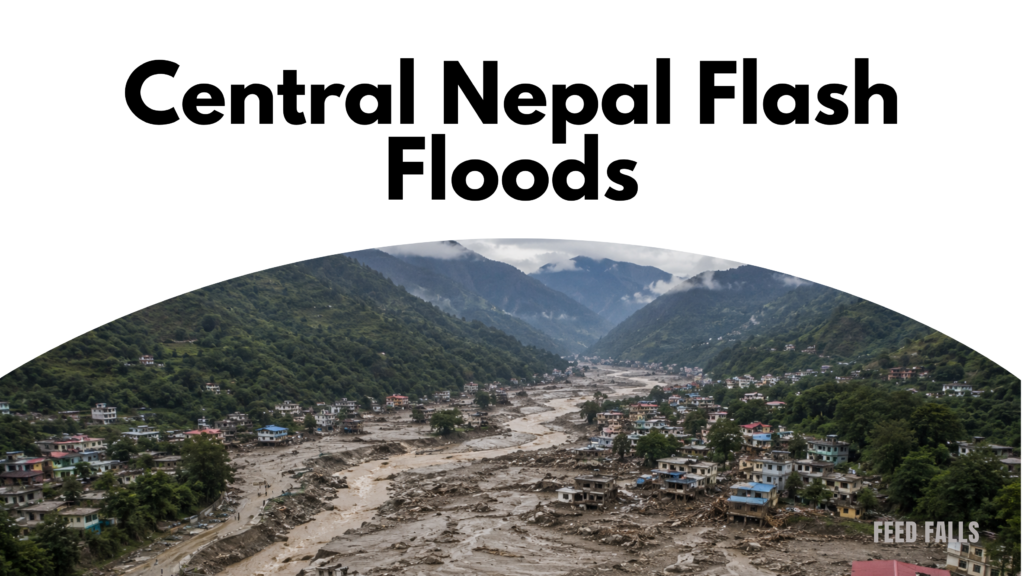
The central Nepal flash floods have become a major humanitarian disaster after a sudden surge of water, mud and debris swept through Himalayan communities on August 26, 2026. The flooding struck near Nepal’s border with Tibet and has left hundreds dead and thousands missing as rescue teams search damaged settlements, roads and a hydropower project.
As of August 29, casualty figures were still changing rapidly. Nepalese authorities reported hundreds of deaths, while combined figures from Nepal and Tibet put the number of people missing at close to 3,000.
What happened in central Nepal?
The disaster began on August 26 near the Nepal-China border, when a massive flow of water and debris moved through the Himalayan river system.
Experts examining satellite imagery said a glacier or ice-rock collapse may have triggered the initial surge. Reuters reported that an ice-rock avalanche entered the Lhende Khola river, producing a powerful flood that carried mud, rock and other debris downstream.
The flooding devastated areas along the Trishuli River, damaging communities and critical infrastructure.
Roads and bridges were destroyed, while homes, schools and hydropower facilities were buried or swept away. The damage has made it particularly difficult for rescue teams to reach some of the worst-hit locations.
Death toll and missing people
The casualty count has continued to rise as rescuers gain access to areas that were previously difficult to reach.
By August 29, reports indicated that more than 600 people had died across Nepal and Tibet, while thousands remained unaccounted for. AP reported at least 633 deaths across the affected regions, while other reports put the figures slightly lower depending on when the numbers were compiled.
The figures should therefore be treated as provisional. Missing-person lists can also change as survivors are located and authorities reconcile information from different districts and countries.
Among those missing are foreign nationals who were traveling through the region, including people visiting the Himalayas for pilgrimage and tourism.
Why was the flooding so destructive?
This was not simply a conventional rain-driven flood.
The initial disaster appears to have involved a sudden collapse of ice, rock and debris into a river. That created a rapid downstream surge capable of carrying enormous quantities of material.
Several factors made the situation especially dangerous:
- Steep Himalayan terrain accelerated the movement of water and debris.
- Narrow valleys concentrated the flood’s force.
- Roads and bridges were quickly destroyed, isolating communities.
- Mud and debris buried buildings and infrastructure.
- A newly formed water body created concerns about additional flooding.
Scientists are still examining exactly how the chain of events developed, so the precise contribution of glacier instability, geological activity and weather conditions remains under investigation.
Rescue operations face major obstacles
Search and rescue teams have been working under extremely difficult conditions.
Helicopters have evacuated survivors and delivered assistance, while ground teams have used heavy machinery to clear mud and debris. Thousands of Nepalese security personnel have been deployed for rescue and relief operations.
One particularly difficult operation involves a hydropower facility where people are believed to have been trapped inside mud-filled tunnels. Rescuers have had to excavate through large quantities of debris while dealing with unstable conditions.
Bad weather has also disrupted operations. Nepal temporarily suspended some search activities on August 29 because of weather conditions, while authorities continued to assess the risk of further flooding.
Concerns about another flood
A major concern after the initial disaster was the formation of a barrier or glacial lake.
Such a lake can become dangerous if water accumulates behind unstable ice, rock or debris and eventually breaks through. Authorities feared that another sudden release could send a new surge downstream.
That risk has since eased, with Chinese authorities reporting on August 29 that the lake’s size had decreased and the immediate threat of a major outburst had fallen. However, officials continue to monitor the area because unstable terrain can create secondary hazards.
Humanitarian needs are growing
The destruction has created urgent needs for survivors who lost homes, transportation and access to basic services.
The International Red Cross estimated that more than 90,000 people were affected, while UNICEF said thousands of children urgently needed assistance. Schools have also been damaged or destroyed.
The immediate priorities include:
- Safe drinking water
- Food and emergency shelter
- Medical care
- Evacuation from isolated areas
- Assistance for separated families
- Temporary transportation links
- Search and recovery operations
The longer-term challenge will be rebuilding roads, bridges, homes and energy infrastructure across difficult Himalayan terrain.
What caused the central Nepal flash floods?
The exact cause is still being studied, but evidence increasingly points toward a glacial or ice-rock collapse as the trigger for the initial flood.
Reuters reported that satellite imagery showed evidence consistent with a glacier breaking apart and sending material into the river valley. Scientists have also been investigating whether a preceding earthquake or other geological factors contributed to the collapse.
It is important to distinguish this from broader claims about climate change. A warming climate can destabilize glaciers and high-mountain environments, but determining the precise cause of an individual collapse requires scientific analysis of the site and surrounding conditions.
What happens next?
The immediate focus remains on finding survivors and people who are still missing.
Nepal has also begun looking beyond the rescue phase. The country’s government says it will need substantial outside technical assistance and billions of dollars for reconstruction. Reuters reported that officials estimated rebuilding costs could reach $4 billion to $5 billion.
The disaster also highlights a wider challenge for Himalayan countries: how to monitor rapidly changing glaciers, detect dangerous water accumulation and share warnings quickly across national borders.
The bottom line
The central Nepal flash floods are still an unfolding disaster. Hundreds have died, thousands remain missing and large areas of infrastructure have been destroyed. Rescue teams continue to work despite difficult terrain and weather, while authorities monitor the possibility of secondary flooding.
The final human and economic toll is not yet known. For now, the priority remains locating missing people, assisting survivors and making affected communities safe enough for relief and recovery to continue.