
Venezuela Oil Deal: What the New U.S. Agreement Means
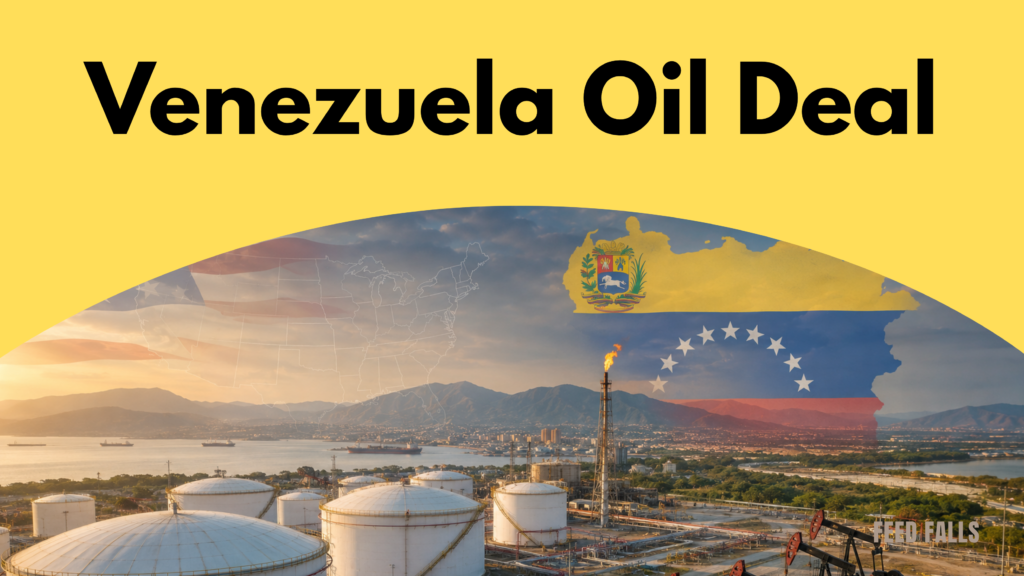
Venezuela is back at the center of global energy and geopolitical attention after President Donald Trump announced on August 28, 2026, that the United States had reached an agreement with Venezuela involving the country’s vast oil reserves.
Trump said the arrangement would give the U.S. majority control of more than 65 billion barrels of Venezuela’s proven oil reserves through a partnership involving private companies. Venezuelan interim President Delcy Rodriguez welcomed the agreement, while important details about its legal and financial structure remain unclear.
The development could reshape Venezuela’s oil industry, increase U.S. involvement in the country’s energy sector and potentially affect global oil markets. But the agreement still faces significant practical and legal questions.
What Is the New Venezuela Oil Deal?
Trump announced the agreement on August 28, describing it as an unprecedented U.S.-Venezuela oil partnership.
According to Reuters, the plan involves 17 strategic oil fields, particularly in Venezuela’s Orinoco Belt and Lake Maracaibo regions. The agreement is intended to bring private investment into Venezuela’s struggling petroleum industry and increase production.
Axios reported that the arrangement is structured as a form of public-private partnership involving the U.S., private companies and Venezuela. Under the reported structure, the United States would receive equity and access to oil produced by the projects.
The exact ownership, financing and operational arrangements have not all been publicly disclosed.
Why Is Venezuela’s Oil So Important?
Venezuela has the world’s largest proven crude oil reserves, making its petroleum industry strategically important despite years of declining production and underinvestment.
Much of the country’s oil is heavy crude, which requires specialized refining infrastructure. Venezuela also has extensive existing oil infrastructure, but years of economic problems, underinvestment and operational difficulties have weakened its ability to produce and export crude at its potential level.
That creates an unusual situation: Venezuela has enormous underground reserves but has struggled to convert those reserves into consistent production and revenue.
What Does the U.S. Want From Venezuela?
The Trump administration has framed greater access to Venezuelan oil as both an energy and economic opportunity.
The agreement could help the United States:
- Gain greater access to Venezuelan crude
- Encourage American investment in Venezuelan oil fields
- Increase Venezuelan oil production
- Potentially add supplies to global oil markets
- Strengthen U.S. influence over Venezuela’s energy sector
Trump has also linked the strategy to lower U.S. fuel prices and rebuilding the Strategic Petroleum Reserve.
The timing is significant because global energy markets remain sensitive to supply disruptions and geopolitical tensions, particularly following the prolonged conflict involving Iran and disruptions around the Strait of Hormuz. Oil prices remained below $90 a barrel at the end of August despite those pressures.
What Could the Deal Mean for Venezuela?
For Venezuela, the potential economic impact is substantial.
The country’s interim government says the arrangement could attract nearly $100 billion in private investment, create jobs and generate significant government revenue. Those figures are government projections rather than independently established outcomes.
If major oil companies invest successfully, Venezuela could eventually increase production, improve infrastructure and generate more revenue from its natural resources.
But investment alone will not solve the industry’s problems quickly.
Venezuela needs functioning infrastructure, reliable oil-field equipment, skilled workers, financing and a stable regulatory environment. Reuters also reported that the country’s energy infrastructure presents major challenges for any large-scale expansion.
What Remains Unclear?
The biggest unanswered question is how the agreement will actually work.
Reuters reported that important details surrounding the financial and legal structure remain unclear, including questions about how the arrangement fits with Venezuela’s constitution and energy laws.
There is also uncertainty about the timeline. Axios reported conflicting indications over whether the agreement was fully finalized, with one administration source saying it had been completed and another saying some aspects remained unresolved.
Those details matter because developing Venezuelan oil fields requires billions of dollars and long-term commitments. Companies will need confidence that contracts, ownership rights and revenue arrangements will remain enforceable.
Could Venezuela Produce Much More Oil?
Potentially, but not immediately.
The country’s enormous reserves do not translate directly into production capacity. Venezuela’s oil industry has suffered from years of underinvestment and deteriorating infrastructure.
Recent efforts have already focused on restoring the industry’s technical foundations. Reuters reported earlier in August that oil-services company SLB obtained access to important Venezuelan oil-field data under a contract with state oil company PDVSA, with the goal of modernizing and digitizing outdated information systems.
Chevron is also working on an agreement that would give it greater operational control and expand its Venezuelan projects.
These developments suggest that rebuilding Venezuela’s oil industry is likely to be a gradual process rather than an immediate production surge.
Why Venezuela Matters Beyond Oil
The Venezuela story is no longer simply about petroleum.
Greater U.S. involvement in Venezuela’s energy industry could reshape the political and economic relationship between Washington and Caracas. It could also give the United States greater influence over one of the world’s largest concentrations of oil reserves.
For Venezuela, the potential payoff is access to capital and technology needed to rebuild an industry that remains central to its economy.
For the global oil market, the key question is whether new investment can eventually translate into substantial additional production.
The Venezuela oil agreement is significant, but its ultimate impact will depend on execution. The headline numbers are enormous, yet the legal structure, investment commitments, infrastructure limitations and production timeline still need to become clearer before its effect on Venezuela and global energy markets can be fully assessed.